Seismic considerations in Geelong demand a thorough understanding of local geological conditions, including the Quaternary sediments of the Bellarine Peninsula and the potential for amplified shaking in softer alluvial profiles. Compliance with AS 1170.4 sets the framework for earthquake actions, but site-specific hazards often require more refined approaches such as [site response analysis](site-response-analysis) to capture deep soil behaviour and ground motion amplification. For critical structures, integrating [base isolation seismic design](base-isolation-seismic-design) can substantially reduce ductility demands and protect structural integrity against rare but credible intraplate events.
This category supports infrastructure, healthcare, and education projects where seismic resilience is non-negotiable, as well as commercial buildings exceeding conventional height or irregularity thresholds. Engineers rely on integrated geotechnical and structural strategies, often pairing [site response analysis](site-response-analysis) with performance-based design to validate foundation inputs and confirm that isolation periods effectively decouple the superstructure from damaging frequencies. The outcome is safer, more durable construction aligned with the performance intent of the National Construction Code.
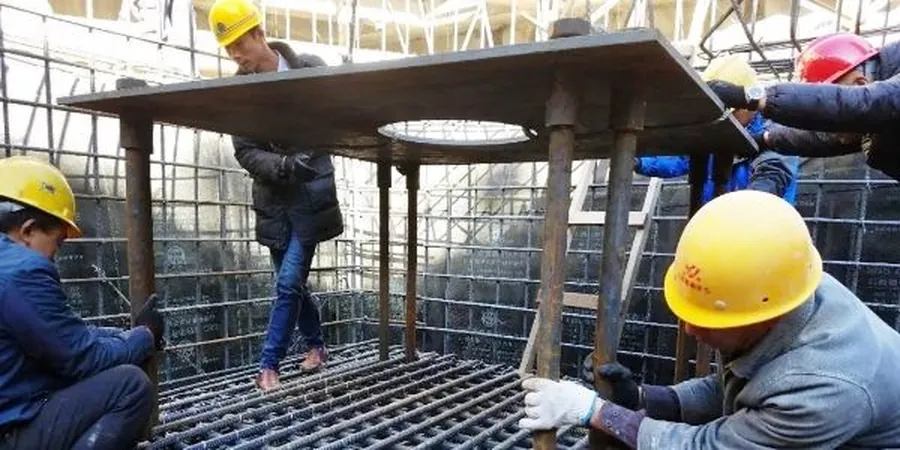
Geelong's variable geology means a one-size isolation design is a shortcut to failure. Site-specific ground motion analysis is non-negotiable.
Scope of work in Geelong
Typical technical challenges in Geelong
A recent project on a 10-story apartment block in East Geelong highlighted what can go wrong. The structural engineer initially specified a lead-rubber bearing isolation system based on the default AS 1170.4 spectrum for site class C. But when we ran a site-specific ground response analysis using the actual VS30 profile from a MASW survey, we found the soil column amplified the motion at 1.5 seconds — exactly where the isolation bearings were tuned. The design displacement at the maximum considered earthquake (MCE) jumped by 40%. That mismatch would have caused the bearings to bottom out or the moat walls to impact. We had to retune the isolation period to 2.8 seconds and increase the bearing clearance. Without that site-specific check, the building would have been at risk of structural damage in a moderate event.
Our services
We provide two complementary services that cover the full scope of base isolation seismic design in Geelong, from initial site assessment to final design verification.
Site-Specific Ground Response Analysis
We perform 1D and 2D ground response analyses using SHAKE or DeepSoil software, calibrated with local borehole logs, MASW profiles, and Geelong-specific seismicity data. Output includes acceleration time histories, response spectra, and site coefficients for the isolation design.
Isolation System Design and Validation
Our team designs lead-rubber bearings, high-damping rubber bearings, or friction pendulum systems based on the target period and displacement. We run nonlinear time-history analyses using the site-specific ground motions and validate the system with sub-assembly testing at an NATA-accredited facility.
Frequently asked questions
When is base isolation really necessary for a building in Geelong?
Base isolation becomes necessary when the building is an essential facility (hospital, emergency centre) or when the design spectrum at the site class exceeds 0.3g. For Geelong, that typically applies to sites with soft soil (site class D) near the Barwon River or Corio Bay. It is also recommended for buildings with irregular geometry or critical contents.
How does Geelong's seismicity compare to other Australian cities?
Geelong sits in a moderate seismic zone with an annual probability of exceedance of 1/500 for a PGA around 0.08-0.12g on rock. That is lower than Adelaide but higher than Sydney. The hazard is driven by intraplate earthquakes from the Otway and Strzelecki Ranges. We use the Geelong-specific recurrence model from Geoscience Australia to derive the hazard curves.
What is the typical budget for a base isolation seismic design study in Geelong?
A full scope including site response analysis, isolation system design, and nonlinear time-history verification typically ranges between AU$7.160 and AU$13.290. This covers field work, lab testing of bearings, and final documentation. The actual cost depends on the number of design iterations and the complexity of the building geometry.