The difference in soil behavior between Geelong's northern suburbs and the Barrabool Hills is striking. Around Corio Bay, we often encounter soft estuarine clays that demand a skin friction-dominated pile design. Head inland toward Highton, and the dense basalt-derived gravels shift the load transfer to end bearing. In our experience, misjudging which mechanism governs can lead to oversized foundations or—worse—settlement issues. That's why we always run a dedicated pile skin friction vs. end bearing analysis before specifying shaft diameters or toe diameters. For sites with layered profiles, we integrate resistivity surveys to map stratigraphy between boreholes. The local geology simply does not allow a one-size-fits-all approach. Every project in Geelong requires site-specific interpretation.
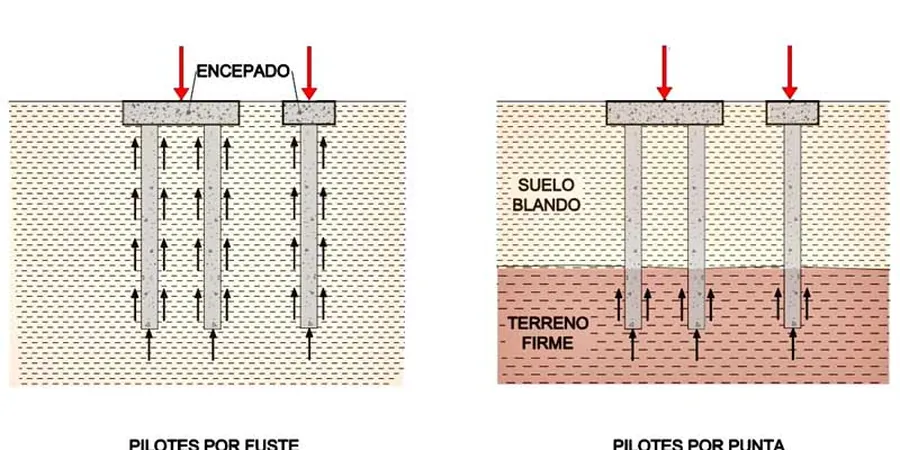
Misjudging skin friction vs. end bearing in Geelong's variable soils can double foundation costs or cause differential settlement within the first year.
Scope of work in Geelong
Typical technical challenges in Geelong
The Newer Volcanics basalt flows that underlie much of Geelong create a treacherous interface for pile design. We have seen cases where a pile socketed into what appeared to be competent basalt actually terminated in a weathered zone with less than 2 MPa UCS. The risk of punching shear failure in the toe is real. Additionally, the paleochannels carved by the ancestral Barwon River contain loose sand lenses that can cause sudden loss of end bearing capacity. Combining the analysis with ground-penetrating radar helps identify these hidden features before piling begins. Ignoring the local geological history here is a liability.
Our services
We provide the following specialized services for pile skin friction vs. end bearing analysis in Geelong:
Static load test interpretation
Back-analysis of maintained load tests to derive actual shaft and base resistance. We compare measured values against calculated capacities using local soil parameters.
CAPWAP analysis
Signal matching of PDA data to separate shaft friction from end bearing dynamically. Useful for production piles where static tests are impractical.
Finite element modeling
PLAXIS or FLAC 3D models simulating pile installation effects and load transfer mechanisms in layered Geelong soils.
Effective stress analysis
Beta-method (Burland) and lambda-method for cohesive soils. We account for pore pressure dissipation during and after driving.
Frequently asked questions
How do Geelong's basaltic clays affect skin friction values?
The high plasticity of residual basaltic clays (PI often > 40) reduces drained shaft friction significantly. We typically apply a beta factor of 0.2–0.35 for long-term design. However, undrained short-term friction can be 2–3 times higher. The key is to model both conditions.
What is the typical cost range for a pile skin friction vs. end bearing analysis in Geelong?
For a standard project with 3–5 boreholes and load test back-analysis, expect AU$1.850 – AU$4.240. Complex sites with variable stratigraphy or deep paleochannels may exceed this range.
When should I use end bearing design versus skin friction design in Geelong?
End bearing is preferred where competent rock or dense gravel is within 15 m of the surface—common in the Barrabool Hills. Skin friction design works best in the deep clay sequences of Norlane and Corio, where rock is 30+ m deep. We always evaluate both mechanisms because transitional profiles exist.