Geelong’s growth as a regional centre has pushed infrastructure into areas that were once low-lying paddocks or old landfill sites near Corio Bay. The city’s mixture of volcanic plains and alluvial terraces means the ground beneath a new roadway can change completely within 200 metres. For any road embankment design in Geelong, understanding the variability of these foundation soils is not optional — it is the difference between a permanent grade and ongoing settlement. We have seen projects where a uniform fill assumption led to differential cracking within the first year. That is why our approach always starts with a thorough site investigation, linking the surface geology with the actual strength parameters needed for a stable embankment.
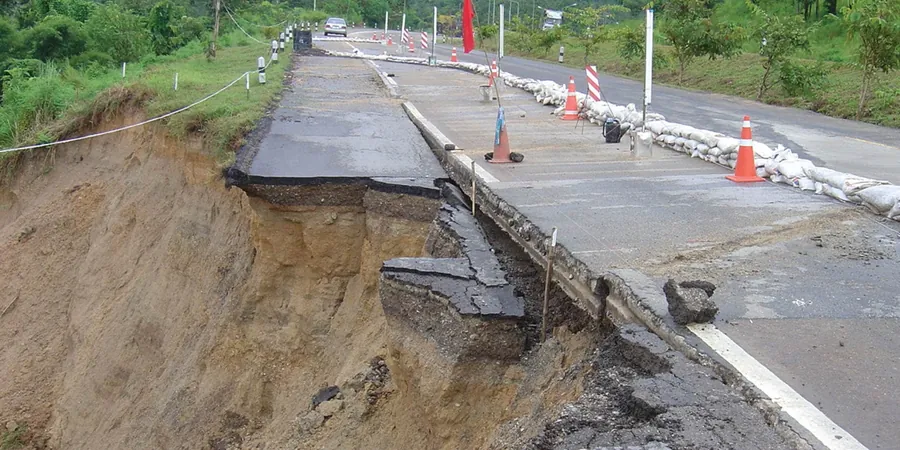
The difference between a stable embankment and a failed one is often the drainage layer you placed — or forgot — 3 metres below the pavement.
Scope of work in Geelong
Demonstration video
Typical technical challenges in Geelong
A road embankment built on the old basalt flows near the Bellarine Peninsula can look solid for months, then settle unevenly after the first heavy rain. We worked on a site where the fill had been placed directly over a silty clay layer without any wick drains or geotextile separation. Within eighteen months the embankment had dropped 150 mm at the shoulder, cracking the asphalt and creating a safety hazard. That scenario is avoidable with proper consolidation testing and drainage design from the start. The risk is not just structural — a failed embankment on a busy arterial road in Geelong can disrupt traffic for weeks while remediation works are done, so the upfront investment in geotechnical assessment pays for itself many times over.
Our services
We cover the full scope of road embankment design in Geelong, from initial subsurface profiling through to compaction certification and long-term monitoring.
Embankment Stability & Settlement Analysis
Using limit equilibrium methods and finite-element modelling, we assess the short- and long-term stability of proposed fills. We account for the layered geology of the Geelong region — including residual basalt soils and soft estuarine clays — to predict settlement and recommend staged construction or ground improvement where needed.
Compaction Control & Fill Specification
We prepare site-specific fill specifications based on Proctor compaction curves and field density testing. Our team monitors placement in real time, ensuring each lift meets AS 1289 standards. We also verify the moisture-conditioning of imported fills so the embankment performs under Geelong’s seasonal rainfall patterns.
Frequently asked questions
What is the typical cost range for road embankment design in Geelong?
For a standard road project in Geelong, the geotechnical component of embankment design typically falls between AU$1.660 and AU$7.230, depending on the number of investigation points, laboratory testing required, and the complexity of the fill geometry. A straightforward low-height fill with good site access will be at the lower end, while a high embankment over soft ground with settlement analysis pushes the cost upward.
How deep should the subsurface investigation be for a road embankment?
The investigation depth should extend to at least 1.5 times the embankment height, or until a competent bearing stratum is encountered. In Geelong, where basalt bedrock can be shallow on the Bellarine side but much deeper in the alluvial corridors near the Barwon River, we often drill to 6–12 metres. A rule of thumb is to probe until you have confirmed there are no soft layers beneath the fill that could cause long-term consolidation settlement.
What drainage measures are required for embankments in Geelong’s climate?
Geelong receives around 520 mm of rain per year, concentrated in winter and spring. For road embankments, we recommend a granular drainage blanket at the base of the fill — typically 300–500 mm of clean crushed rock — plus lateral finger drains every 20–30 metres to intercept seepage. On clay subgrades, a geotextile separator between the natural ground and the fill prevents pumping and keeps the drainage layer functional. These measures are covered under AS 4678 for earth retaining structures and should be designed with the local water table in mind.