Geelong sits on the eastern shore of Corio Bay, with elevations ranging from sea level to over 200 metres along the Barrabool Hills. This varied topography, combined with the region's underlying basalt and sedimentary sequences, creates natural instability zones that demand regular surveillance. Monthly geotechnical slope monitoring provides the continuous data stream needed to detect early signs of movement before they escalate into failures. We install and read automated inclinometers, piezometers, and surface prisms across your site, feeding results directly into a cloud-based dashboard. Our team holds NATA accreditation for field instrumentation and follows AS 4678-2002 for earth-retaining structures. Complementing this with a resistivity survey helps map subsurface moisture zones, while permeability testing quantifies drainage behaviour in the weathered profiles typical around Geelong.
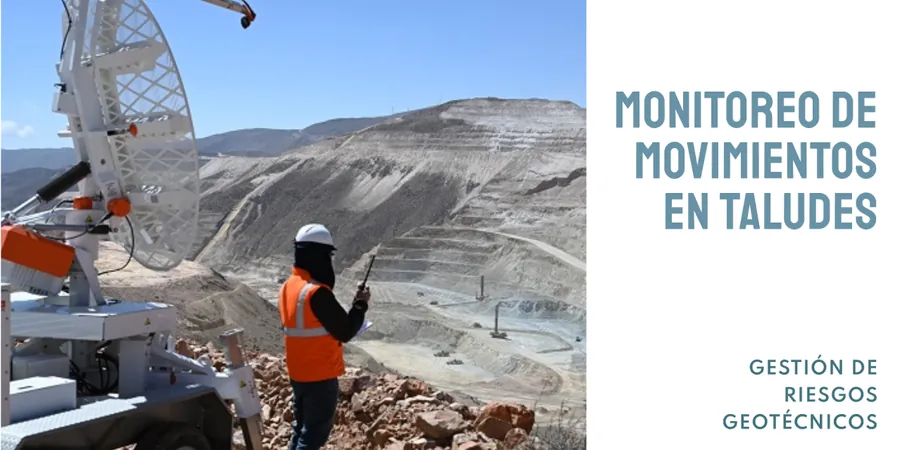
Monthly monitoring transforms qualitative slope observations into quantitative trend lines, giving engineers defensible data for decisions on remediation or continued safe operation.
Scope of work in Geelong
- Inclinometer deflection profiles to 0.1 mm precision
- Piezometric levels in standpipes and vibrating-wire cells
- Surface displacement vectors via total station or GNSS
Typical technical challenges in Geelong
Geelong experiences a temperate oceanic climate with winter rainfall averaging 50 mm per month. Wetting fronts penetrate the fractured basalt caprock and saturate the underlying claystone, reducing effective stress along pre-existing shear planes. The risk accelerates when drainage infrastructure is blocked by vegetation or sedimentation. Our monthly monitoring picks up pore-pressure increases and small lateral deformations weeks before a catastrophic event. Early detection allows controlled intervention — surface drainage upgrades, toe buttressing, or anchor installation — rather than emergency response after a failure has already damaged structures or public roads.
Our services
Our monthly slope monitoring package is built around three core service lines that address the full detection-to-reporting cycle.
Automated Inclinometer & Piezometer Arrays
Permanent in-place inclinometer strings and vibrating-wire piezometers installed in boreholes. Readings are logged automatically and transmitted via cellular modem. We calibrate each string against a manual traverse every sixth visit to confirm sensor drift is within tolerance.
Surface Deformation Survey (Total Station / GNSS)
A network of reflective prisms or GNSS antennas fixed to the slope face and surrounding stable ground. Monthly survey rounds measure 3D displacement vectors. Results are overlain on the site GIS to show movement hot-spots relative to the original design geometry.
Reporting & Alarm Protocol
Each monthly cycle produces a technical report that includes raw data plots, interpreted trend lines, and a risk-level update. If any parameter exceeds the pre-agreed amber or red threshold, an automated email and SMS alert is sent to the project engineer within two hours of detection.
Frequently asked questions
What is the difference between monthly and real-time slope monitoring?
Monthly monitoring uses periodic manual or automated readings taken every 28 to 35 days. Real-time systems stream data continuously from in-place sensors. Monthly programmes are suitable for post-construction verification and long-term asset management where movement rates are slow. Real-time systems are better for active construction zones or high-risk slopes with rapid failure potential.
How much does monthly geotechnical slope monitoring cost in Geelong?
The typical budget for a monthly monitoring programme in Geelong is between AU$700 and AU$1.890 per cycle. The final figure depends on the number of instrument locations, site accessibility, and whether manual survey or automated logging is used. We provide a fixed-price quote after the initial site walkover.
Which slopes in Geelong are most prone to instability?
Slopes cut into the Barrabool Hills and the basalt-capped escarpments along the Bellarine Peninsula show the highest movement rates. The combination of low-strength claystone, high seasonal water tables, and prior agricultural land use creates conditions where creep and shallow translational slides occur. Monthly data helps distinguish seasonal cycles from progressive failure.