A common mistake we see in Geelong is assuming that a deep fill pad, once leveled, is ready for a slab. Builders bring in a compactor, roll the surface, and call it stable. But fills in this region, particularly along the Barwon River floodplain, often contain pockets of organic silt or demolition rubble that settle at different rates. Without a proper foundations on fill analysis, differential settlement cracks appear within the first year. We have been called to sites in Newcomb and Corio where the slab dropped 40 mm in one corner because the fill depth varied from 1.5 to 3.2 m across the same house footprint. That is why we always run a plate load test before signing off on a fill pad, and combine it with a soil compaction assessment to verify density across the full depth.
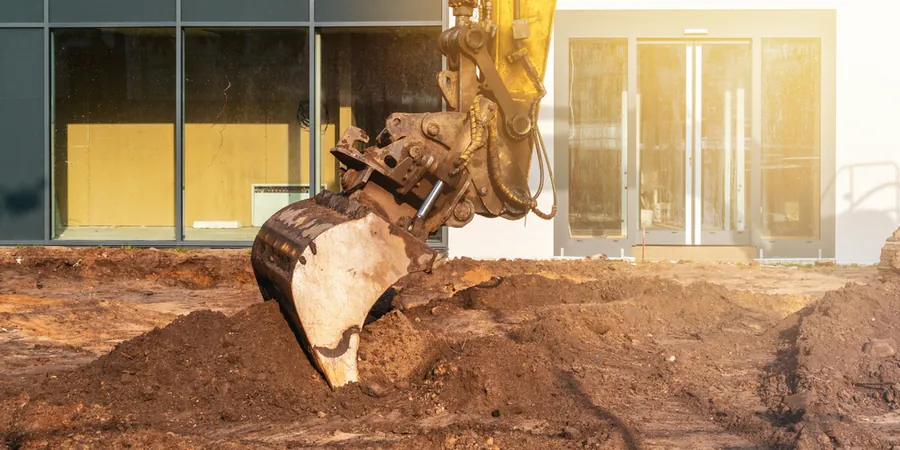
A fill that passes a surface proof-roll can still hide a 50 mm settlement pocket 2 m below grade. Profile first, pour later.
Scope of work in Geelong
- We drill through the fill to reach natural ground, logging strata changes with depth.
- Undisturbed tube samples are taken at 1.5 m intervals for oedometer and triaxial testing.
- Nuclear density gauge readings at 300 mm increments check compaction against AS 3798.
Typical technical challenges in Geelong
AS 1726 requires that all fill materials be classified and tested for collapse potential before founding a structure. In Geelong, the risk is amplified by the variable geology. The eastern suburbs sit on Quaternary alluvium over Tertiary basalt, while the western side has deeper sands and clays. If the fill bridges a soft zone, the foundation can undergo differential settlement exceeding 1:200, which cracks brick veneer and jams doors. We have measured post-construction settlements of 60 mm in a 4 m deep fill at a warehouse in North Geelong. The client had skipped a consolidation test on the underlying clay. Our analysis now mandates consolidation testing for any fill over 2 m thick.
Our services
We offer three core services for foundations on fill analysis in Geelong, each tailored to the specific fill type and project scale:
Fill Profiling and Compaction Verification
CPT and nuclear density gauge surveys across the fill footprint. We map thickness, density, and moisture content at 10 m grid spacing, delivering an iso-compaction map with pass/fail zones.
Settlement and Bearing Capacity Assessment
Oedometer and triaxial testing on undisturbed samples. Output includes immediate and consolidation settlement predictions, plus allowable bearing capacity per AS 2159 for shallow foundations on fill.
Collapse Potential and Liquefaction Screening
Double-oedometer tests on unsaturated fill specimens. We evaluate collapse on wetting and run a liquefaction trigger analysis using the Youd et al. 2001 method, critical for fills in Geelong's flood-prone areas.
Frequently asked questions
How deep does the fill have to be to require a foundations on fill analysis in Geelong?
Any fill exceeding 1.0 m in thickness should be analyzed. The Geelong Building Code references AS 1726 for sites with more than 0.5 m of uncontrolled fill. Deeper fills over 2.0 m always require a CPT or borehole investigation, plus settlement calculations.
What is the typical cost range for a foundations on fill analysis in Geelong?
For a standard residential block in Geelong, expect AU$1.410 to AU$3.600. This includes a CPT to 6 m depth, two undisturbed tube samples, oedometer tests, and a summary report with bearing capacity and settlement estimates.
Can I build directly on fill if it passes a proof-roll test?
No. Proof-rolling only checks the top 300 mm. Fills in Geelong often have soft layers at depth, especially near the Barwon River. We have seen 3 m fills that passed a roller but settled 40 mm after construction because a buried organic layer was not detected.
What is the difference between controlled and uncontrolled fill for foundation design?
Controlled fill is placed in lifts, compacted to 95% standard compaction per AS 3798, and tested. Uncontrolled fill has no compaction records and may contain debris, organics, or oversized material. AS 1726 treats uncontrolled fill as a suspect material requiring full profiling before any foundation can be designed.