Many local contractors in Geelong underestimate the low undrained shear strength of the soft estuarine clays found along the Barwon River and the Bellarine Peninsula. Without a field vane shear test (VST), those clays get treated like firm ground. That mistake leads to bearing failures, excessive settlement, or even rotational slips. A vane shear test directly measures the in-situ undrained shear strength (Su) in cohesive soils, giving a reliable baseline for foundation design. For projects near the waterfront or on reclaimed land, this test is the first line of defense. It also pairs well with laboratory triaxial testing for a complete picture of the soil profile. In Geelong, the team follows AS 1726 – 2017 for all vane testing procedures, including rod friction correction and torque calibration.
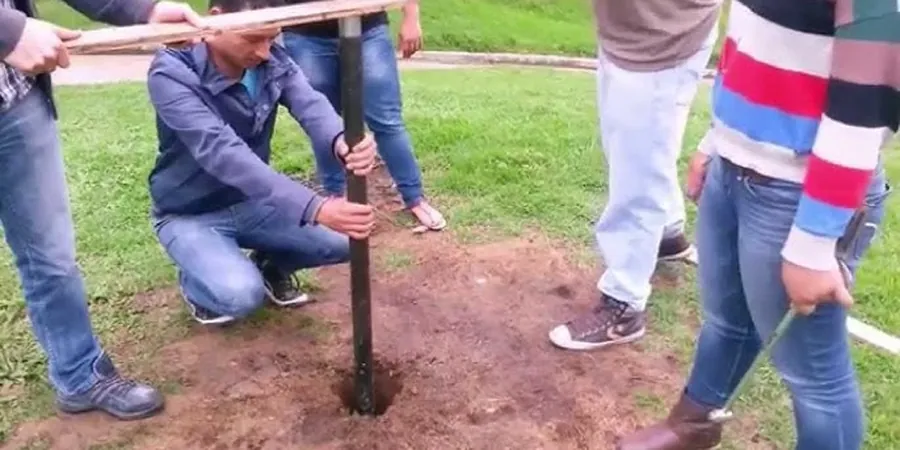
A vane shear test in Geelong’s soft clays can mean the difference between a stable foundation and a costly slip failure.
Scope of work in Geelong
- Peak torque (Tmax) for undisturbed shear strength
- Remoulded torque (Trem) for sensitivity ratio
- Rod friction correction for deep tests
- Penetration rate and rotation speed
Typical technical challenges in Geelong
The field vane shear test uses a slender rod and a four-bladed stainless steel vane. In Geelong, the equipment is mounted on a light truck or a tracked carrier to reach the soft ground near Lake Connewarre or the tidal flats. The vane is advanced through a casing to avoid disturbance in the upper crust. At the test depth, the vane is pushed 0.5 m beyond the casing bottom. Then the torque head applies a steady rotation. If the clay has hidden sand lenses or shell fragments, the vane can hit refusal or give erratic readings. That is why the Geelong crew always runs a pre-test borehole log and uses a calibrated torque wrench. They also repeat the test at 1.5 m intervals to capture the natural variability of the marine clays. Without this care, the Su values can be misleading and the foundation design may be unsafe.
Our services
We offer two tailored field vane shear test packages for Geelong projects. Both include NATA-accredited procedures and full reporting.
Standard VST – Single Test Point
One vane shear test at a specified depth, including torque calibration, rod friction correction, and a detailed report with Su and sensitivity values. Ideal for small residential extensions or single-lot subdivisions in Geelong.
VST Profile – Multiple Depths
A full profile of vane shear tests at 1.5 m intervals through the soft clay layer. Includes borehole logging, depth correction, and a graphical Su vs. depth plot. Recommended for commercial developments, bridge abutments, or waterfront structures in Geelong where soil variability is high.
Frequently asked questions
How much does a field vane shear test cost in Geelong?
The cost for a field vane shear test in Geelong typically ranges from AU$1,060 to AU$2,270 per test point, depending on depth, access conditions, and whether a full profile or single test is required. Bulk testing for large subdivisions can reduce the per-point rate.
When should I request a vane shear test instead of a triaxial test?
Use the vane shear test when you need the undrained shear strength of soft, saturated clays in situ without sample disturbance. It is faster and cheaper than a triaxial test, and it gives a direct measure of Su at depth. The triaxial test is better for stress-path analysis or for stiffer clays where you need effective stress parameters.
What soil types in Geelong require a vane shear test?
The vane shear test is essential for soft estuarine clays, silty clays, and organic muds found in the low-lying areas of Geelong, such as the Barwon River floodplain, Bellarine Peninsula foreshore, and the former tidal flats around Corio Bay. These soils typically have Su values below 40 kPa and high sensitivity.