AS 1726:2017 sets the standard for field permeability testing in Geelong, a city with a varied geological history shaped by the Barwon River and volcanic plains. The Lefranc test is routinely applied in the Quaternary alluvial sands and clays along the river corridor, while the Lugeon method suits the jointed basalt flows of the Victorian Volcanic Plain. In Geelong, the combination of these two methods gives engineers a clear picture of mass permeability, essential for dewatering design and seepage analysis under existing structures. We complement these with geotechnical drainage studies when groundwater control is critical, and slope stability analysis for cuttings in the stiffer clay horizons.
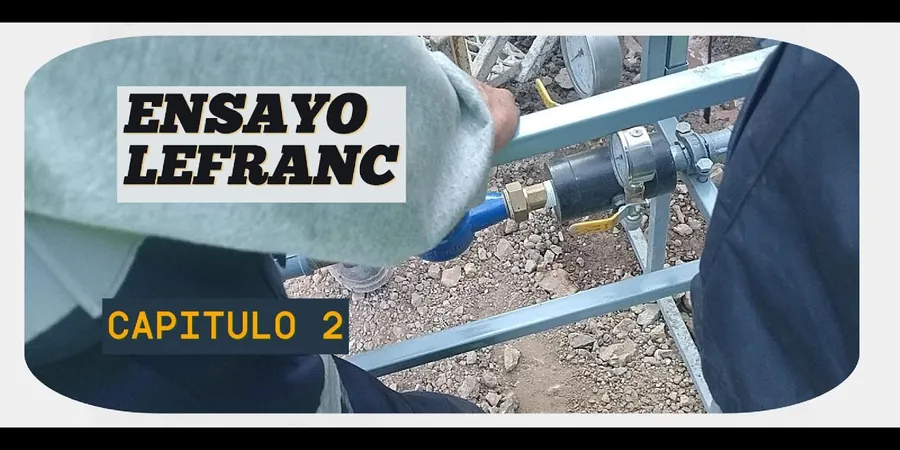
In Geelong's basalt flows, Lugeon values above 20 Lugeon units typically indicate the need for systematic grouting before excavation.
Scope of work in Geelong
Typical technical challenges in Geelong
In Geelong, we often see projects where designers assume uniform permeability across the site based on a single borehole. The reality is that the alluvial terraces along the Barwon River can show k values varying by two orders of magnitude within 20 metres laterally. Ignoring this variability leads to undersized dewatering systems and unexpected water ingress during basement excavation. For basalt sites, assuming intact rock permeability from laboratory tests can under-predict flow rates by a factor of ten, because joints and cooling fractures dominate the mass conductivity. A field permeability test program with at least three test zones per stratum reduces this risk substantially.
Our services
We deliver a complete field permeability testing service for Geelong projects, covering both Lefranc and Lugeon procedures with NATA-accredited equipment and reporting.
Lefranc Permeability Testing
Constant and variable head tests in boreholes for soils and soft rocks. Suitable for permeability values between 10⁻⁸ and 10⁻³ m/s. We install standpipes and carry out rising or falling head tests per AS 1726.
Lugeon Packer Testing
Staged pressure injection tests in rock for permeability and groutability assessment. We use single- and double-packer systems up to 3 m intervals, measuring flow rate at five pressure steps to compute Lugeon values.
Dewatering Design Support
We provide interpreted permeability profiles and recommendations for well yield, drawdown, and grouting volumes. Results are delivered with raw test data and a signed geotechnical report suitable for council submissions.
Frequently asked questions
What is the difference between the Lefranc and Lugeon test methods?
The Lefranc test measures soil permeability by injecting or extracting water under constant or falling head in a borehole; it is suited to soils and weak rocks. The Lugeon test is a pressurised injection test performed in rock boreholes using packers, and results are expressed in Lugeon units (1 Lugeon = 10⁻⁷ m/s). Lugeon tests identify joint-controlled flow and grouting requirements.
How many test zones are recommended per borehole in Geelong?
For Geelong's alluvial profiles, we recommend testing at least three zones per borehole: one above the water table, one at the water table, and one below it. In basalt, we test every change in fracture intensity, typically every 1.5 to 3.0 m, to capture the variability of joint sets.
How much does a field permeability test cost in Geelong?
The cost for a standard Lefranc or Lugeon test in Geelong ranges between AU$920 and AU$1,570 per test zone, including mobilisation within 30 km of the city centre and a basic report. Additional zones, deeper boreholes, or remote site access may increase the price.
Can field permeability tests be done in standing water or tidal zones?
Yes, we regularly perform tests in boreholes below the water table using a packer system. For tidal zones near Corio Bay, we record water level fluctuations before and during the test to correct for tidal effects. The test duration is typically two to three hours to capture steady-state conditions.